
A football field has to do more than look good at kickoff. It must support cuts, tackles, sprints, practices, and season-long traffic. Athletic directors and contractors also have to assemble that surface within tight construction windows, often between spring activities and preseason camp.
Natural football field grass also provides the feel players want and the professional finish fans expect. Big roll sod helps crews cover large areas quickly with reduced seams, including repair of damaged sections.
At Magnum ENP, our team builds the equipment and sources the supplies that help move quality sod from the farm to the field.
Table of Contents
- Why players still trust natural grass
- Why big roll sod fits tight schedules
- How quality starts at the sod farm
- How netting protects each roll
- How installation equipment improves field finish
- What pro-level preparation can teach
- Frequently asked questions
Why Players Still Trust Natural Grass
Synthetic turf offers uniformity and can support frequent scheduling. Still, many football players prefer natural grass because it feels softer and more forgiving underfoot.
The natural base provides a more forgiving landing during headers, tackles, and diving saves. Natural turf releases a planted cleat smoothly rather than holding it as firmly as some synthetic systems do. These reduce the number and severity of impact and torque injuries.
The NFL Players Association has also documented a long-standing player preference for natural surfaces and concerns about non-contact lower-extremity injuries on artificial turf.
How to Promote the Safest Playing Field
No surface is automatically safe. Poor drainage, compaction, uneven growth, or worn areas can create hazards even on a natural football field grass.
Athletic directors need a complete plan for:
- Base quality
- Irrigation
- Establishment
- Mowing
- Nutrition
- Testing
- Repair
Player preference shouldn’t replace objective field testing, but it should influence the environment a program creates. A dependable natural surface combines the feel athletes want with the maintenance discipline that safe, high-level play requires.

Why Big Roll Sod Fits Tight Schedules
Seeding a full field takes time. Grass must germinate, fill in, develop roots, and withstand traffic before it can support a football schedule.
Big roll sod delivers a mature surface from the start. Crews can cover large areas, then focus on:
- Watering
- Mowing
- Final preparation
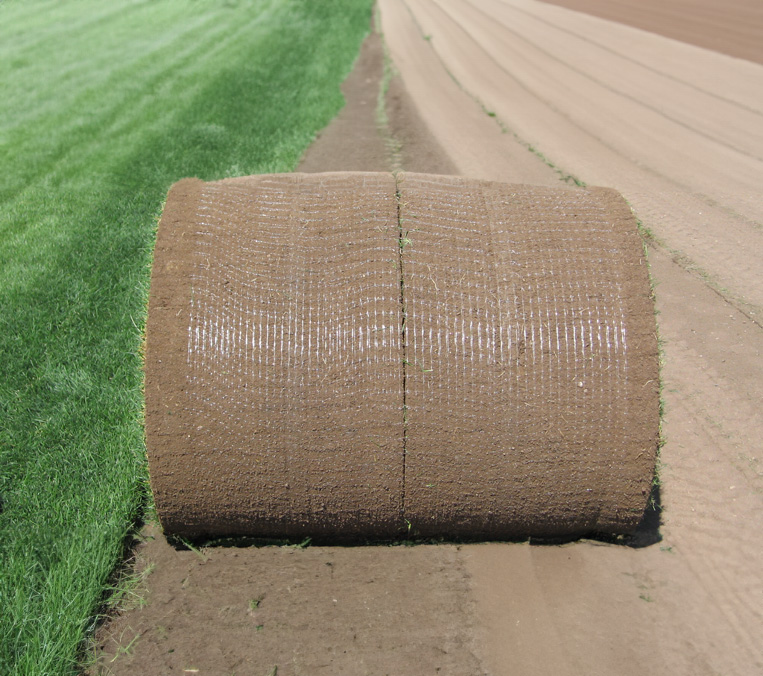
Each large roll replaces many smaller pieces. Fewer seams can create a cleaner finish and reduce edge work, so you get the benefits of a sod field without the labor-intensive installation of small strips.
Big Roll Sod Simplifies Maintenance
Big rolls also help crews replace:
- Worn sidelines
- Goal-line areas
- Team boxes
- Event damage
- Natural/biological thinning
All without disturbing healthy turf across the rest of the field.
Schools Benefit Too
That speed becomes especially useful for schools. Excavation, grading, drainage, and irrigation may consume much of early summer. Once the base is ready, the sod still needs time to anchor itself before practice begins.
Big roll sod helps contractors put football field grass in place efficiently, so establishment can start sooner.
This allows adequate time to prepare the foundation. For a fast installation, you can’t do shortcuts on the groundwork. Contractors must confirm elevations, soil conditions, water movement, compaction, and irrigation coverage before delivery. Big rolls simply help the placement phase keep pace with a demanding sports calendar.
Related topic: Delivering World-Class Grass for Soccer Fields
How Quality Starts at the Sod Farm
A professional field begins months before installation. Growers:
- Select regional grass varieties
- Build healthy roots
- Manage weeds and disease
- Prepare the crop for harvest
When a contractor needs a specific thickness, width, or volume on a tight schedule, harvesting accuracy becomes part of the final field quality.
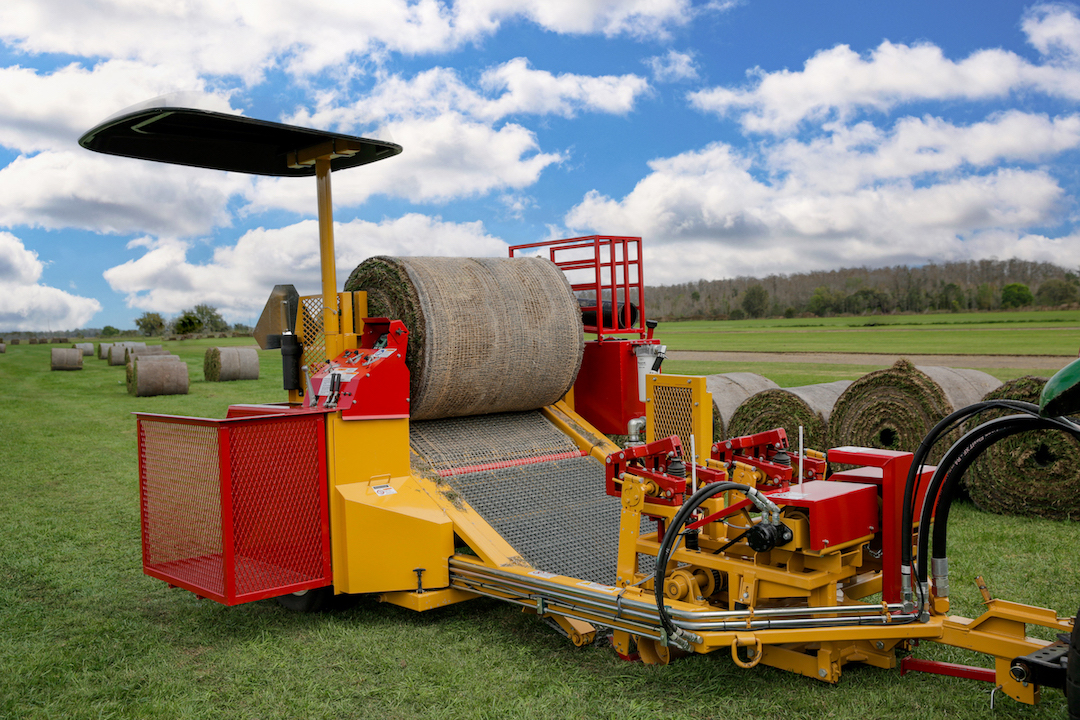
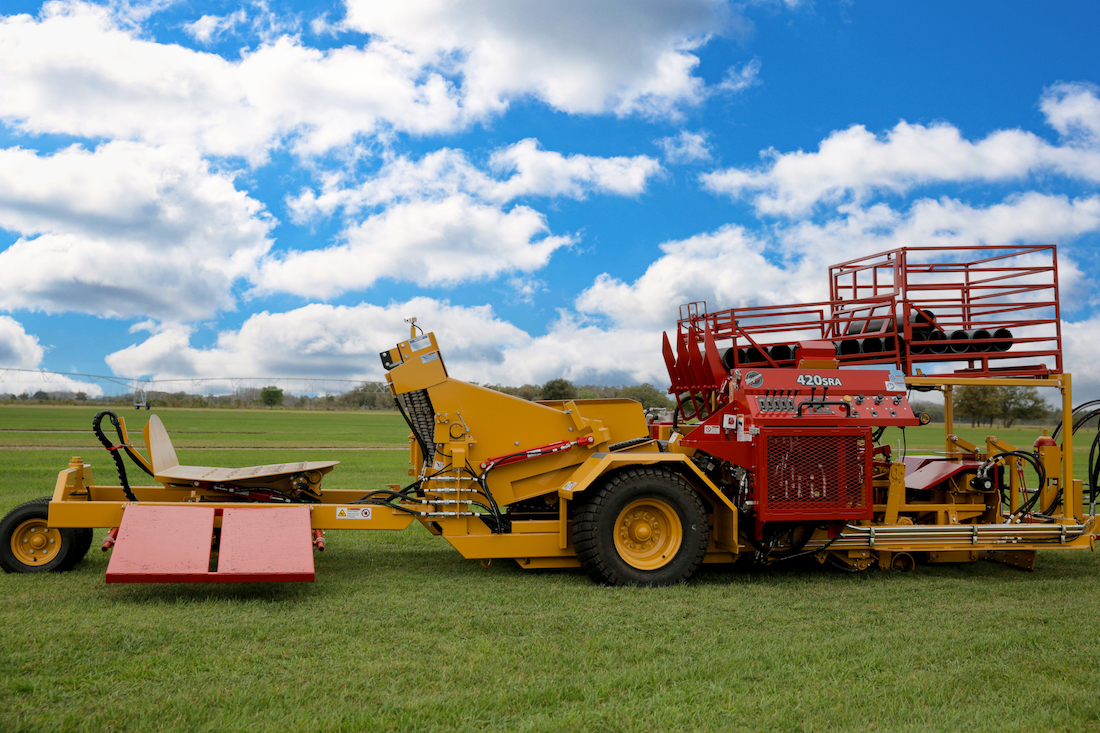
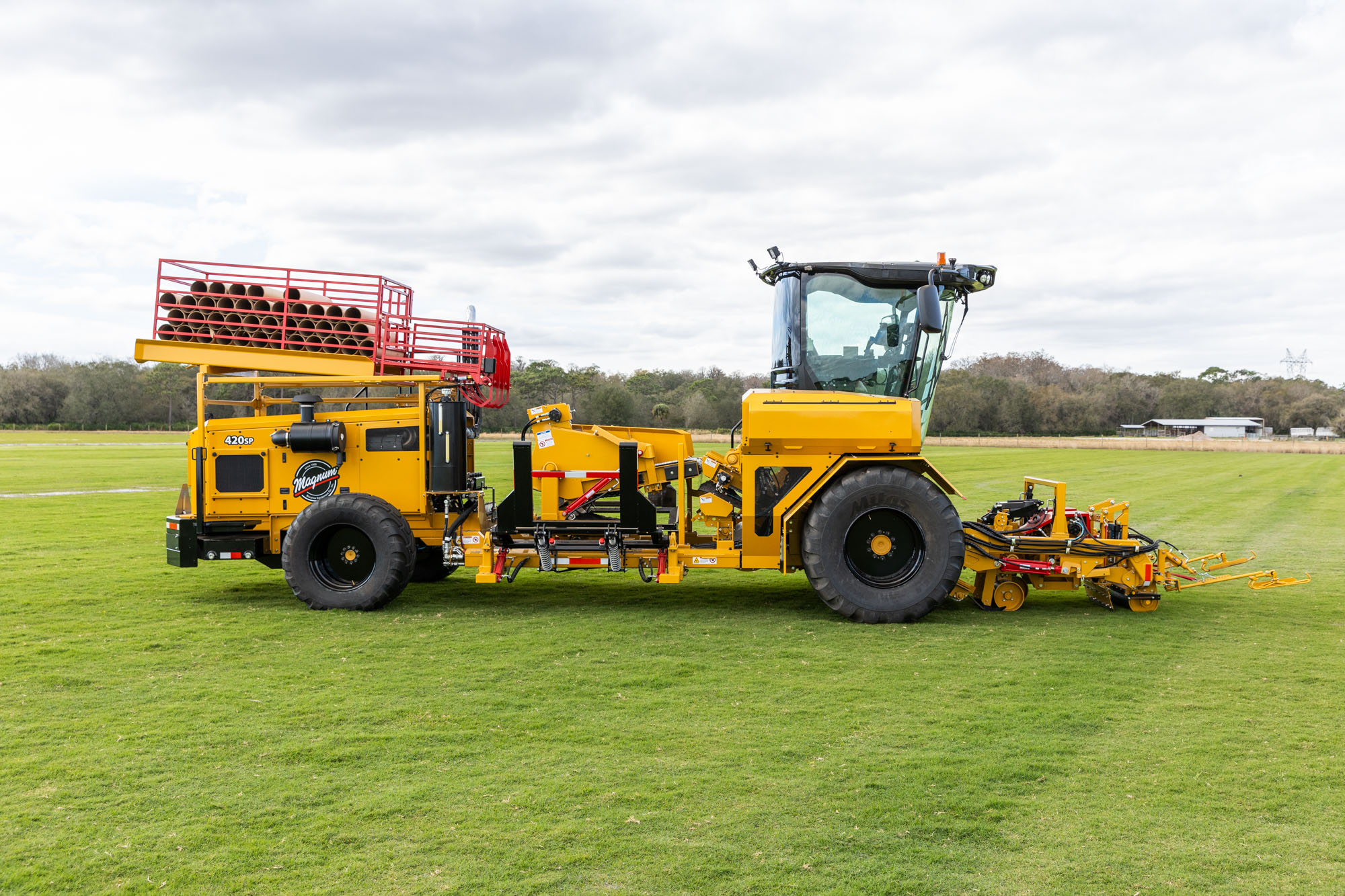
Our big roll sod harvester gives growers control over cutting thickness and rolling tension. Its patented net application can reinforce tender sod, while synchronized anti-vibration cutter heads reduce machine stress. Clean, consistent cuts help rolls fit together more predictably at the jobsite.
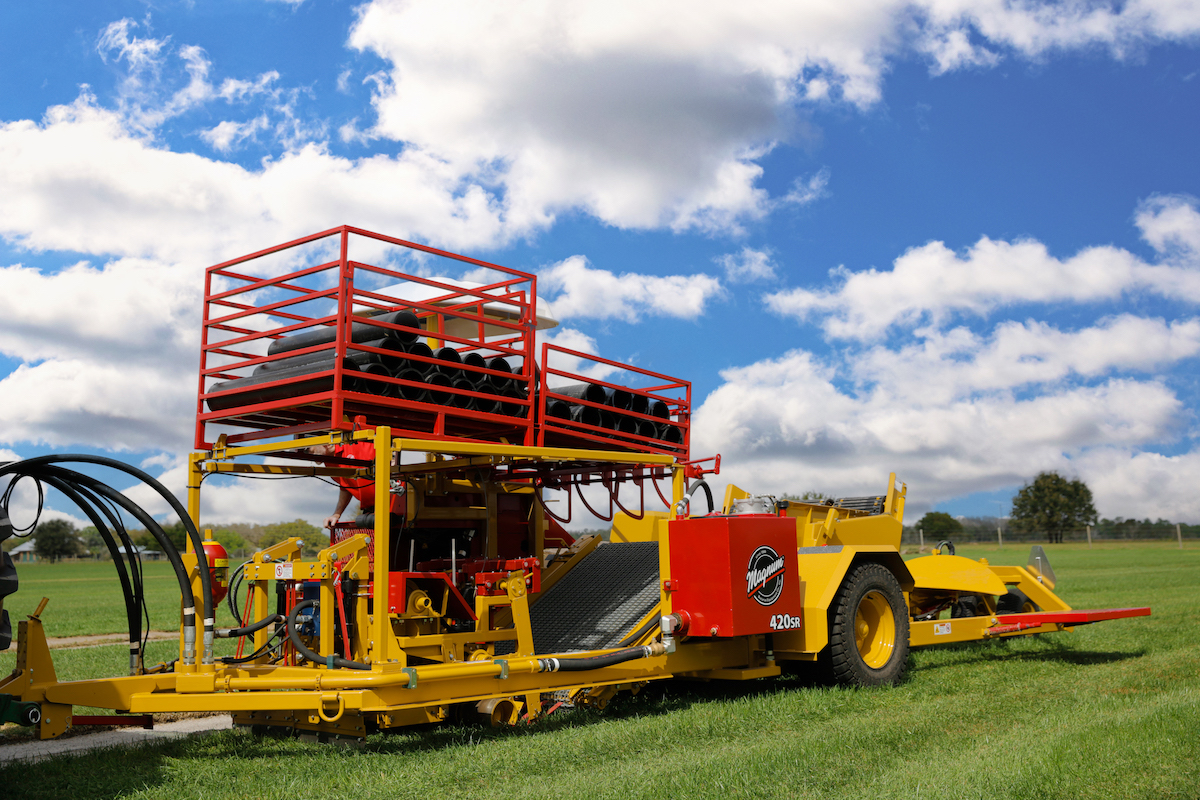
Growers can also choose the automation level that fits their operation. The semi-automatic big roll harvester adds a self-starting conveyor, tube-handling features, and an automatic chop system. The automatic big roll harvester supports one-person control and remote diagnostics. The self-propelled big roll harvester gives high-volume operators a direct overhead harvest view without requiring a separate tractor.
These machines help growers turn months of careful crop management into clean, transportable rolls for school fields and professional stadiums.
How Netting Protects Each Roll
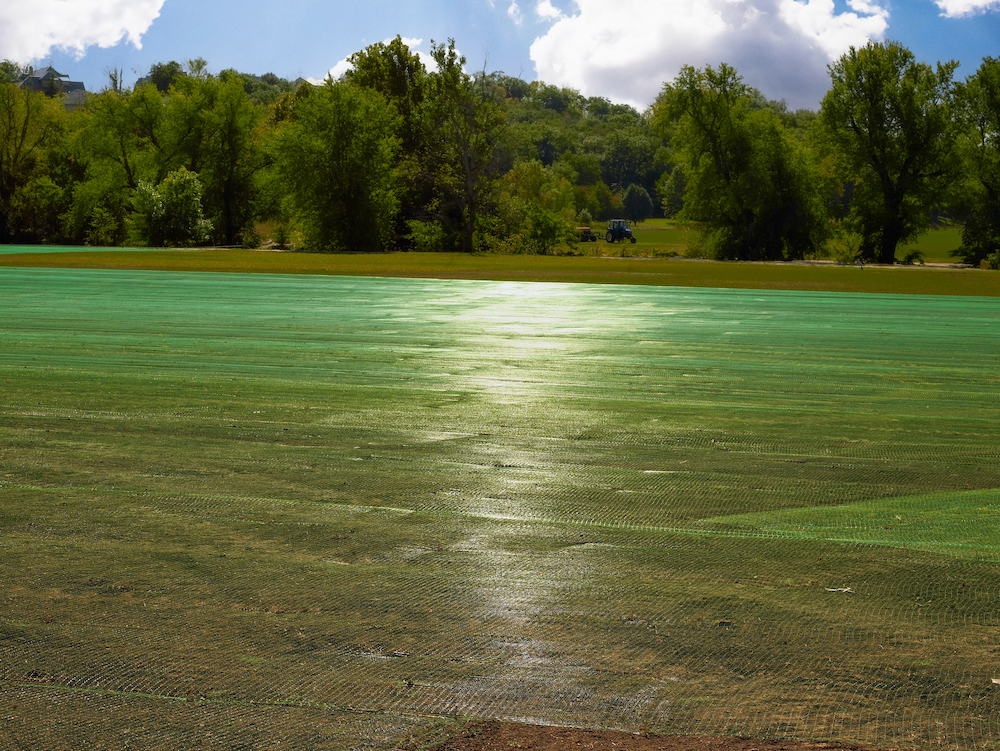
Sod faces stress during harvesting, loading, transport, unloading, and placement. Magnum ENP’s big roll sod netting reinforces each roll, so it can hold together through those stages.
Magnum offers varied widths, strengths, and materials, including standard, degradable, and plant-based options.
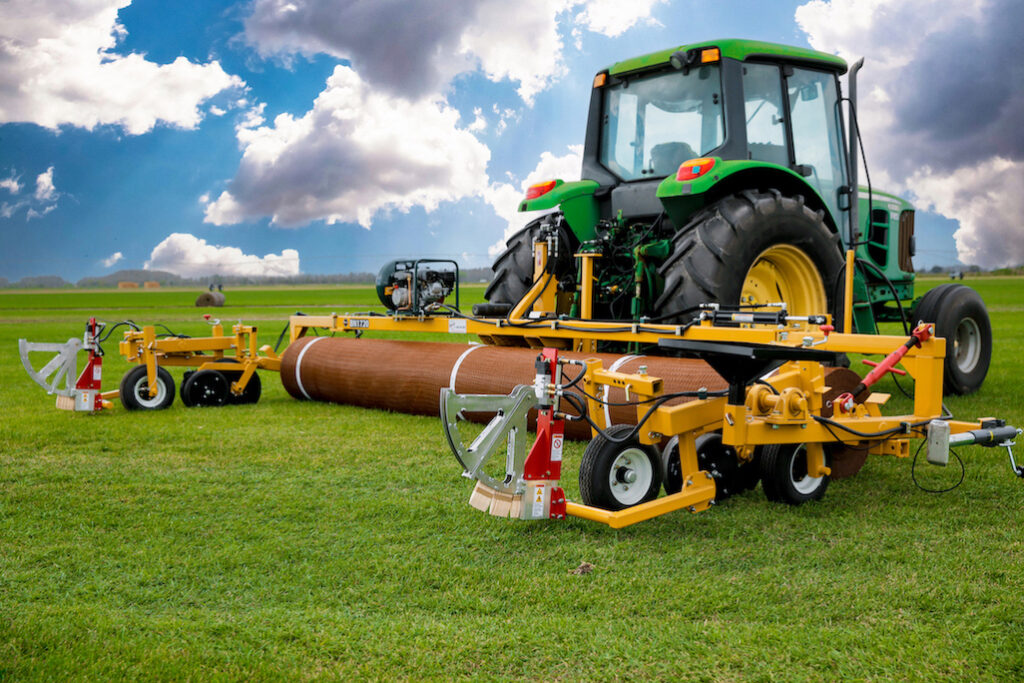
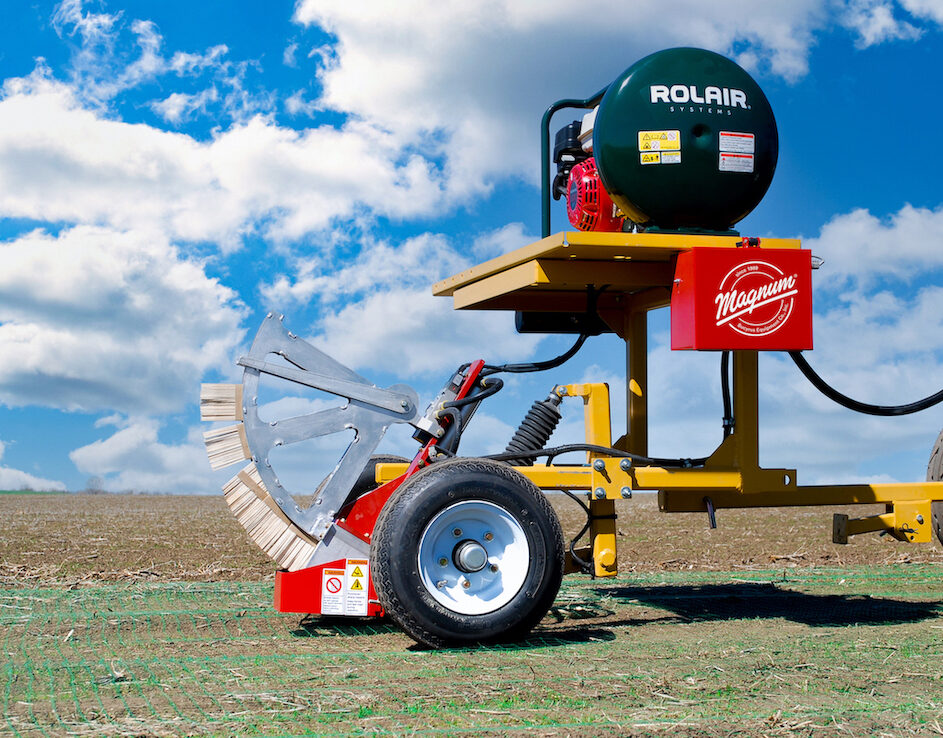
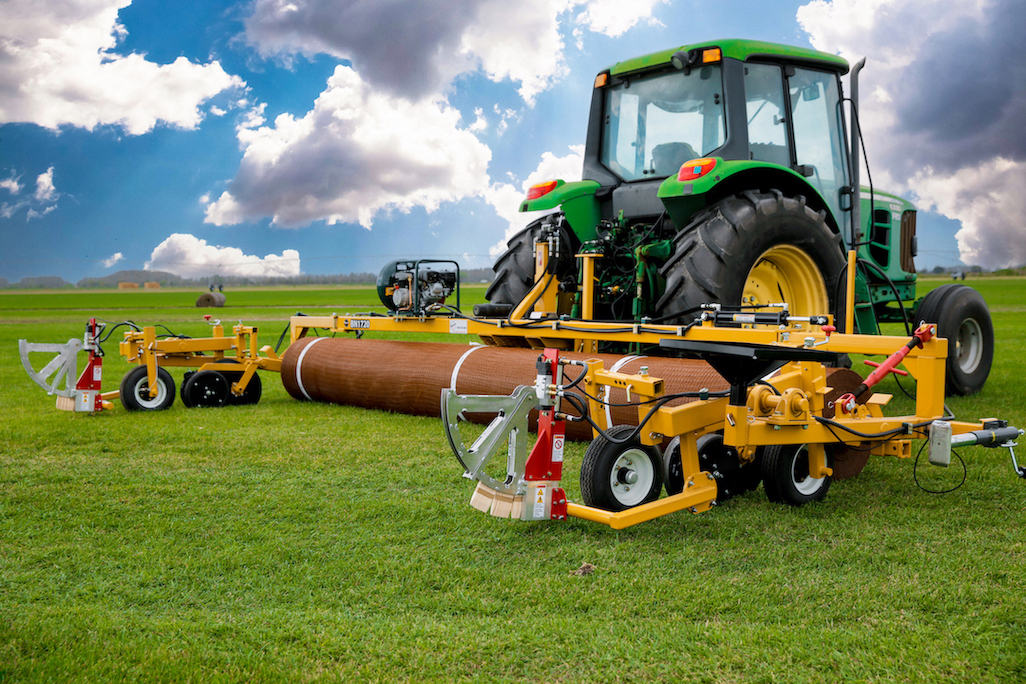
The support system can begin in the production field. Our BN-1720 field net installer creates divots, inserts the netting, and uses a press wheel to secure and level the soil. Optional auto-stakers anchor the material as the machine moves. This process reduces repetitive manual work and helps growers maintain consistent net placement.
For a stadium project, a broken roll wastes turf and interrupts the crew. Reliable netting from Magnum ENP helps football field grass arrive intact and unroll with the shape created during harvest.
A Note About Bio-Netting
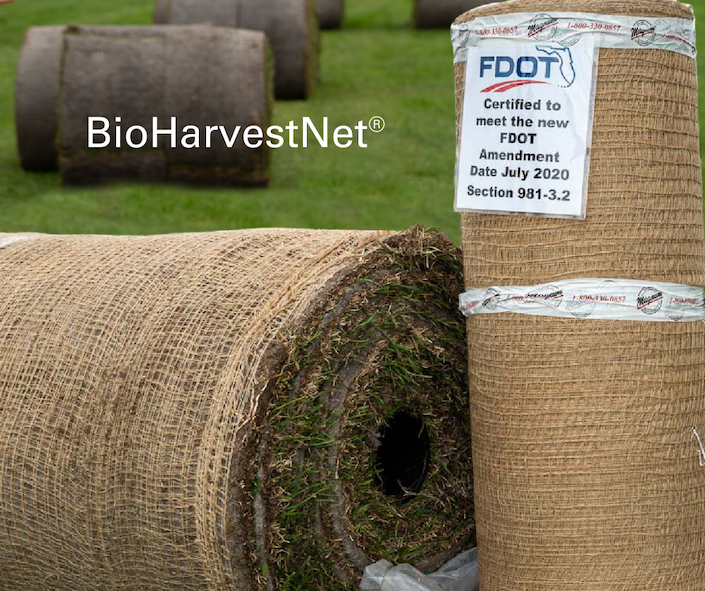
With the increased demands of football fields, owners and managers of playing fields can save on labor by using BioHarvest netting. This naturally-sourced, 100% organic netting biodegrades within 30 to 120 days, guaranteed.*
Our BioHarvest netting lets you lay down your sod without worry about removing the netting. Football fields, soccer pitches, golf course projects and more get done more quickly for a faster return to usage.
Our BioHarvest netting is certified to meet the FDOT Requirements Section 981-3.2.
(*As per Nedia, the netting manufacturer.)
How Installation Equipment Improves the Stadium Finish
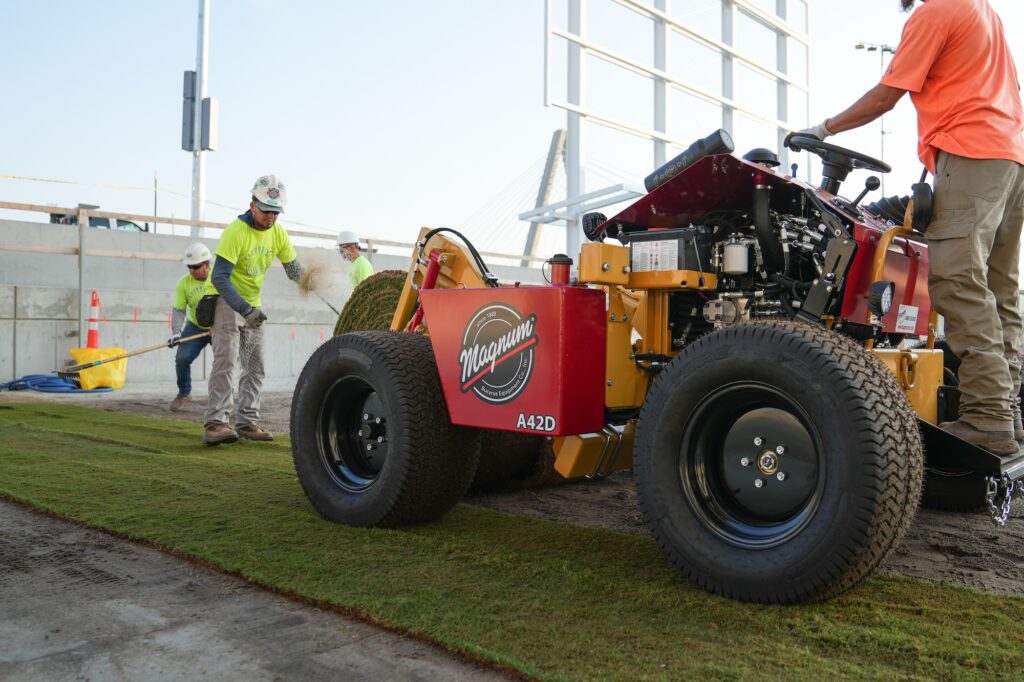
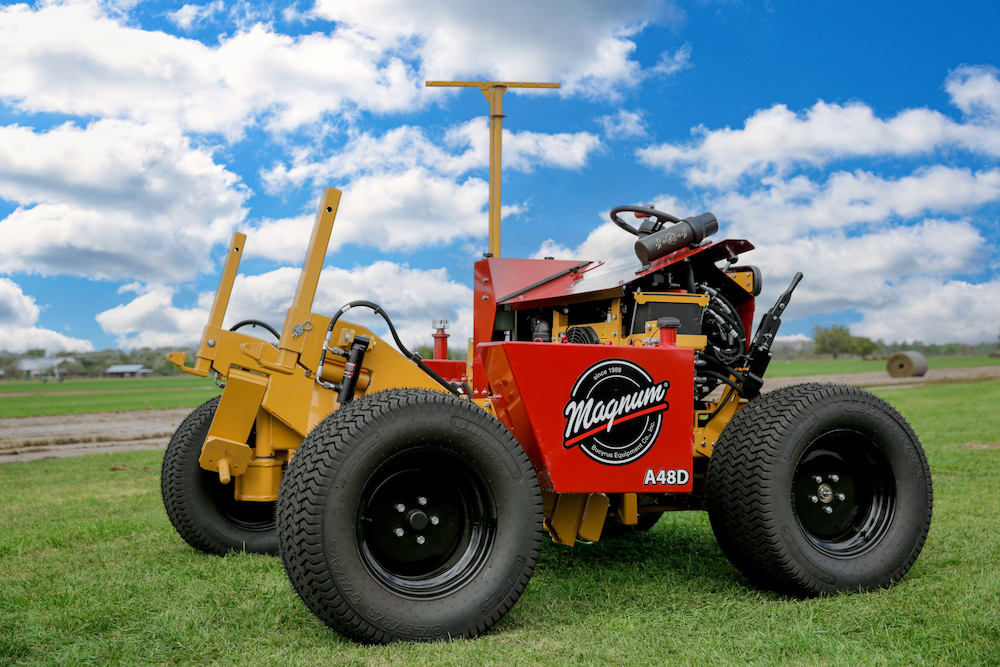
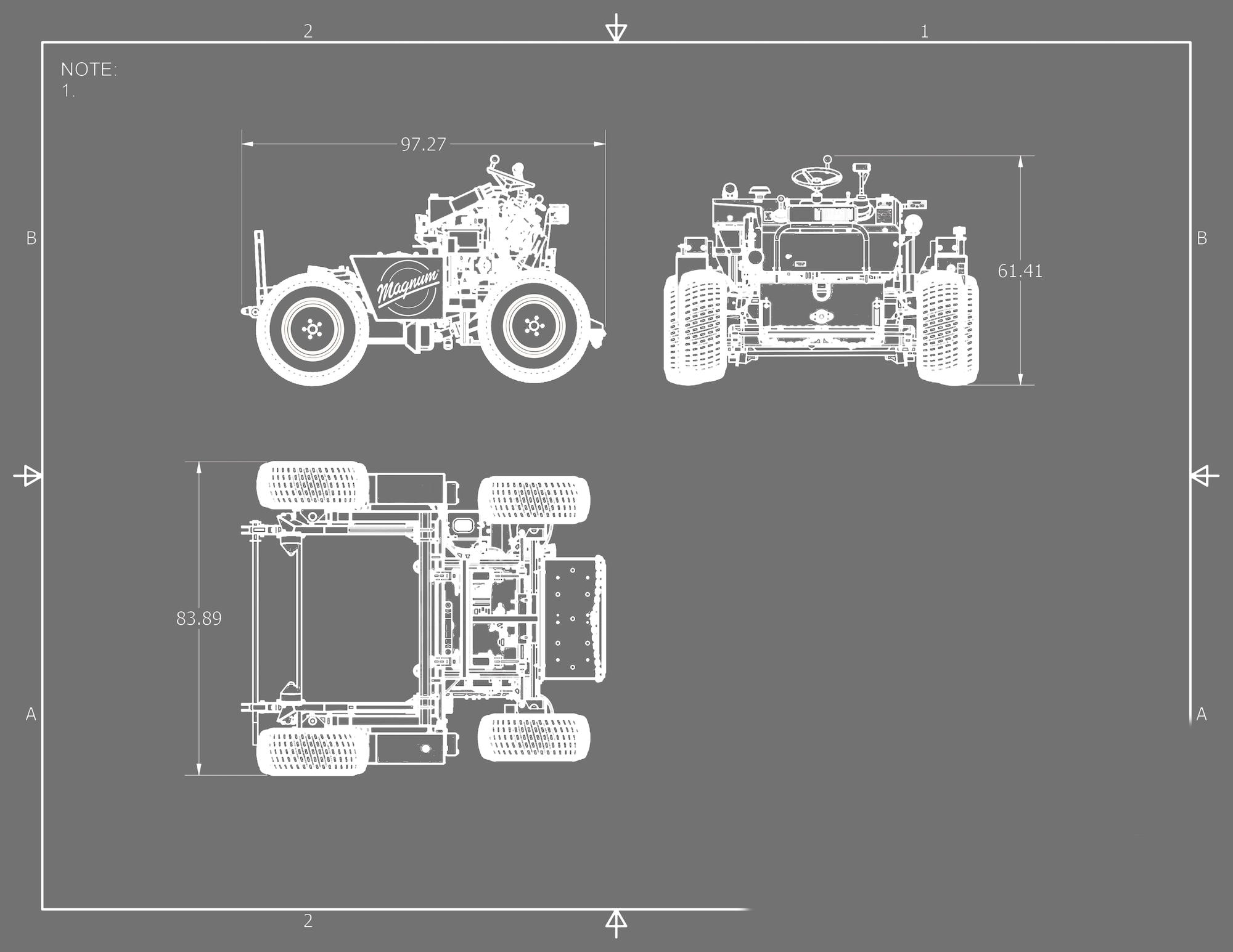
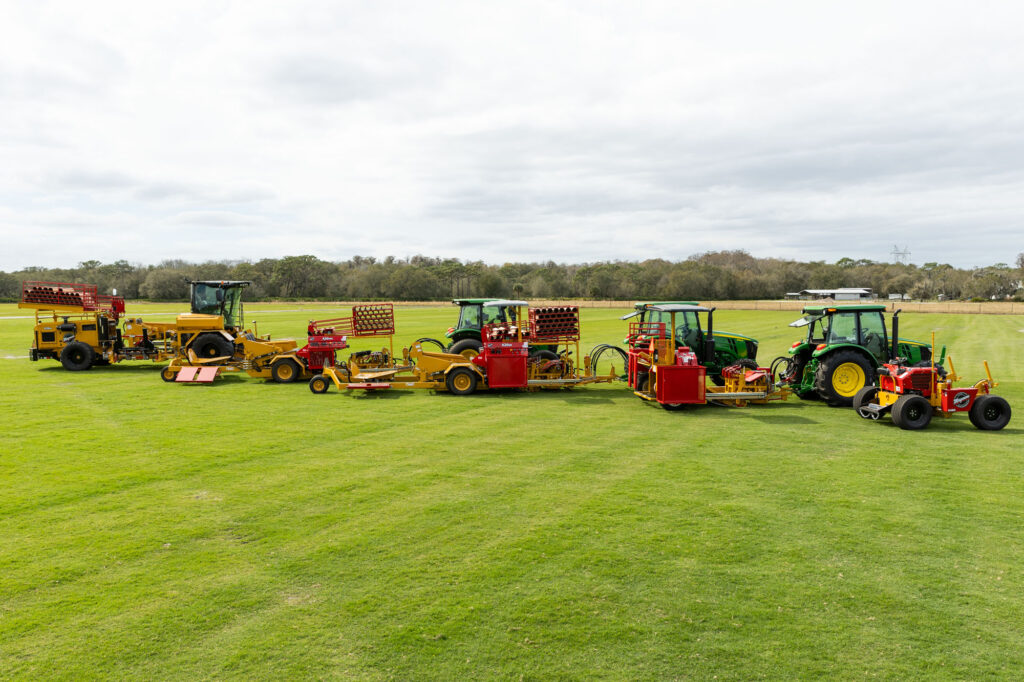
At the stadium, the crew must place sod quickly without damaging the prepared base or newly installed turf. The A-Series big roll sod installer combines four-wheel drive, a tight turning radius, and a compact footprint.
Magnum designed it to install sod efficiently while limiting damage to the surface underneath.
- Hydraulic controls help the operator pick up, tension, and place rolls precisely.
- Flotation tires reduce rutting and compaction.
- Available attachments support grading, rolling, material handling, and other site tasks.
The machine streamlines a labor-heavy process and helps the operator maintain a steady pace. Careful placement gives the grounds team a better starting point. Tight seams, aligned edges, and controlled tension reduce the need for hand corrections.
The same approach supports in-season repairs. Crews can remove damaged areas between the hashes, near the goal line, or along the sidelines, then install mature football field grass with a uniform finish.
Related topic: How to Deliver Game-Day Quality Stadium Turf
What Pro-Level Preparation Can Teach Every Program
FIFA calls the pitch a stadium’s “main stage.” The surface quality affects performance, appearance, and the venue’s reputation. Its “Quality Programme for Football Turf” also provides standardized testing criteria for comparing field quality.
Magnum ENP equipment supports growers and contractors working toward that level of preparation. Big roll harvesters and the A-series installer help crews harvest and place large rolls of healthy natural turf for stadiums and outdoor venues.
The same principles serve an international tournament field and a hometown stadium: grow healthy sod, harvest it cleanly, protect it in transit, and place it precisely.
Athletic directors can borrow that discipline:
- Set performance goals early.
- Bring the grower, contractor, architect, and grounds team into the schedule before construction starts.
- Confirm the grass variety, thickness, roll dimensions, delivery sequence, installation pattern, irrigation plan, and establishment window.
Together, those steps help create football field grass that looks professional, feels natural under cleats, and gives your grounds team a strong surface to manage throughout the season.
FAQs About Grass for Playing Fields
Here are a few common questions athletic directors and field contractors ask when planning, installing, and maintaining a natural grass football field.
Is natural grass better than artificial turf for football?
Many players prefer natural grass because it feels softer and more forgiving, allowing them to run, pivot, and move around the field more safely.
Research and NFLPA statements have also raised concerns about some synthetic surfaces and lower-body loading, with artificial fields leading to higher rates of both minor and season-ending injuries for players. However, safety depends on the complete field system and its condition.
A well-designed, properly maintained natural field offers a strong option for programs that value player preference, repairability, and a traditional game-day experience.
How quickly can big roll sod cover a field?
Complete project timing for a football field depends on:
- Access
- Crew size
- Roll dimensions
- Weather
- Staging
- Site readiness
Can crews repair only damaged sections?
Yes, crews can remove worn turf and replace targeted areas with compatible sod. Big rolls work well for larger wear zones, because they cover more ground with fewer seams.
The grounds team should match the grass variety and thickness, prepare the area carefully, and limit play until the new sod anchors.
What equipment supports a big roll sod installation?
Football field sod installation may require:
- Loaders or forklifts for staging
- A dedicated big roll installer
- Grading and rolling tools
- Irrigation equipment
- Field-testing tools
Magnum’s A-series installer places big rolls and accepts attachments that support several preparation and finishing tasks.
Put a Better Field Beneath Your Players
A successful field project begins with the grower, contractor, and athletic department working from one clear plan. Magnum ENP brings decades of sod-farm experience, American-made equipment, and practical support to the process.
When your next project calls for durable, natural football field grass, we help you identify the harvesters, netting, and installation equipment that fit your job. Talk with the Magnum ENP team and prepare a field for the first practice, opening kickoffs, and Friday night lights.
Get Pricing for Your Operation